We can't find the internet
Attempting to reconnect
Something went wrong!
Hang in there while we get back on track
Event Details
February Support Meeting
Monday, February 16, 2026 • 07:00 PM - 09:00 PM
St Andrews with Castle Gate United Reform Church
We've had two specific requests. 1. How do we deal with emotional dysregulation and rejection sensitivity? and 2. (which actually dovetails with #1) a show-and-tell for our favorite fidget toys. What gizmos and gadgets do we like the best to help us focus and maintain our zen?
Resources for this session
WebMD article summarizing Emotional Dysregulation
Additude summary of RSD
Emotional Dysregulation + Rejection Sensitivity Dysphoria
Emotional Dysregulation is present in many different mental health conditions, but its prevalence in ADHD is well-documented. Likewise, Rejection Sensitivity Dysphoria, while not a formal diagnosis, is also very common in ADHDers. So common, in fact, that a number of leading voices in the field of ADHD treatment and research are trying to get it included in the diagnostic criteria.
Emotional Dysregulation:
WebMD has a great summary here: What Is Emotional Dysregulation?
"Emotional dysregulation means your emotional responses are hard to control, or they feel stronger than a situation calls for. It’s sometimes called mood swings, emotional lability, or marked mood fluctuation."
Rejection Sensitivity Dysphoria (RSD)
This article from ADDitude is lkewise a good sumamry: Rejection Sensitivity Dysphoria
RSD is characterized by intense mood shifts triggered by a distinct episode, typically one of the following:
- rejection (the real or perceived withdrawal of love, approval, or respect)
- teasing
- criticism, no matter how constructive
- persistent self-criticism or negative self-talk prompted by a real or perceived failure
Our conversation about coping with both ranged through:
Self Medication
Some of us cope, have coped, with various over the counter ahem remedies, from drug use, to alcohol, to online shopping to help us deal with the negative feeling associated with not being able to regulate our moods.
Real Medication
Getting the right titration for you, when it works, can be genuinely life-changing. And our loved ones and associated can usually tell when we've missed a dose, it's that impactful. For many of us, it's like you turn down the "static" knob in our brains, and we can better cope with the stressors that pop in and out of our lives.
How to maintain our zen?
When we're in the middle of the dysreulation episode, it's hard to hang on. Practicing mindfulness and grounding can help us get out of the moment. Singing a song about all of the horrible things we would like to do to the target of our frustration was a suggestion, but more broadly, the suggestion was to do something that changes the direction of your cognitive load so you can switch track and dissipate the intense emotional response more easily. Practicing your coping strategies when you're calm is also a huge benefit. Building the "muscle memeory" of the strategy when you have energy helps you to engage it more seamlessly when you don't.
Fight, Flight, Faun, Freeze.
We all run the gamut of these responses to stressful situations. What do you do when you're in the throes of intense emotion? Chances are, within each of us, we react differently to different people, too.
RSD is crippling.
It has a logical target, but it is an irrational escalation of perceived pain. We quickly take "I don't like what you're doing," and translate it into "I don't like you." This feeling isn't helped by a lifetime of people expressing their frustration and dissapointment with our behaviour, either.
What does RSD feel like?
One of our regular attendees asked people to describe how RSD feels since he doesn't identify with feeling it. Nutshell: it's a personal and unique experience that feels real bad.
How do we control our anger?
We either control our anger or it controls us. We talked about our experiences with the way society relates to and identifies "male" vs "female" anger, and how those gender divides get us into trouble in different ways.
Fidget Toys
We also had a fun show-and tell of several ways we can cope with our stress in physical form.
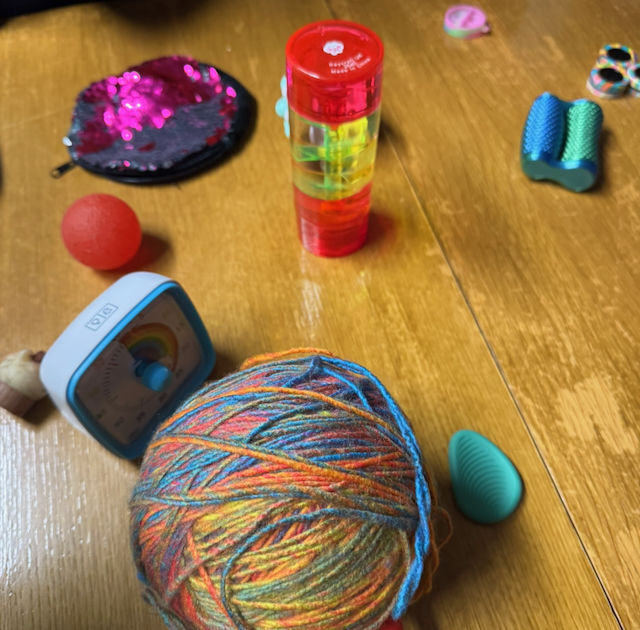
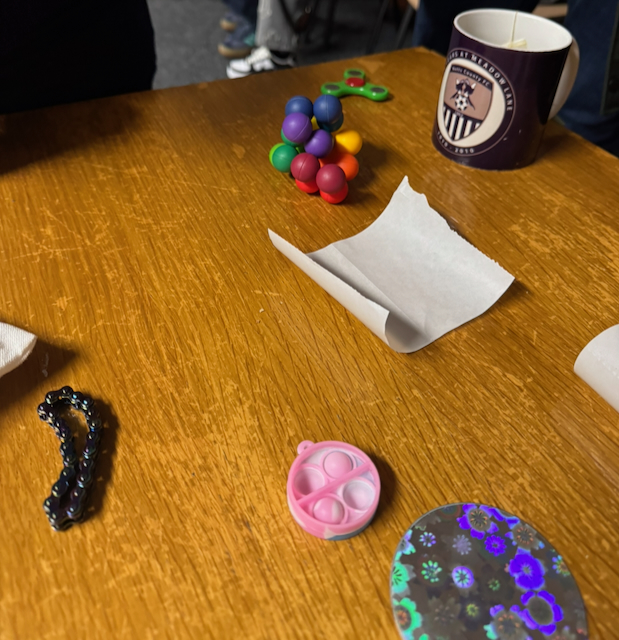
Why do we use fidgets?
Nobody knows for sure why we like our fidget toys. Our brains make lateral connections easily, for sure. And from an evolutionary standpoint, the group survived better when there were people always on the lookout for danger. Maybe that's it? The bits of our brains that are always scanning the brush for predators don't have as much to do these days, so we need to occupy them with a distraction. For some it's music. For others, it's pacing. Perhaps you like to chew gum? Or maybe you take your knitting to family gatherings. You do you.
Sit and Stand Desk (and Anti-Fatigue Mat)
Surprisingly (not surprising), we tend to do really well with standing desks. Having to redirect effort and energy just to standing in place is often enough for us to focus on our task at hand.
Taking Notes
A brilliant way to occupy your brain during that meeting that could have been an email. We don't take notes to remember things later; we're taking notes to remember things now. Or we're not taking notes at all, rather doodling or writing poetry. The HR person leading this mandatory sensitivity training doesn't need to know.